Why Direct Material Sourcing Matters
Nearly every area of the business is impacted by manufacturing firms' sourcing choices:
Cost Management
The cost of raw materials can represent a large percentage of manufacturing costs. Good Direct material sourcing will ensure the firm can negotiate low prices, reduce waste, and be profitable.
Product Quality
Quality in finished goods depends heavily on the quality of raw materials purchased. A poor sourcing decision will lead to defective products, customer complaints and damage the reputation of the firm.
Supply Chain Stability
When a manufacturer uses reliable sourcing strategies it can prevent production interruptions. Disruptions in the supply of raw materials can lead to failure to meetdeadlines,increased costs and customer trust will deteriorate.
Competitive Advantage
When manufacturers establish reliable suppliers and efficient sourcing procedures, it will enable the company to better adapt to changes in the market and provide a competitive advantage.
What Is Direct Material Sourcing?
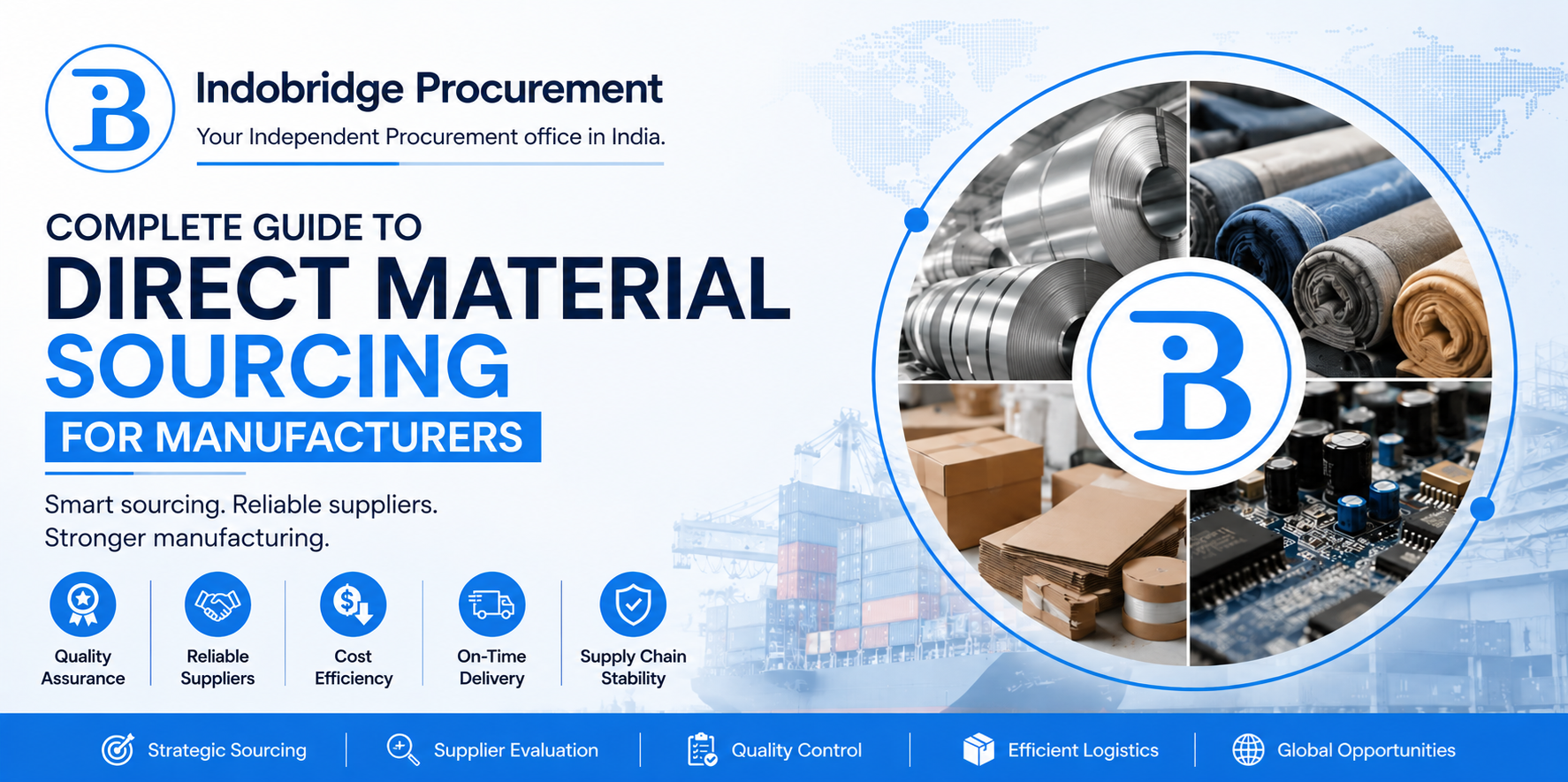
The process of procuring the raw materials, components and inputs that actually become a part of the finished product to be manufactured is known as direct material sourcing. These materials directly influence the product's quality, cost of manufacturing, and time taken to deliver to the customer.
Some of the direct material products include:
- Steel used to produce machines
- Fabric used to produce clothes
- Electronic components used to produce consumer electronic items
- Packaging used to package finished products
- Wood used to manufacture furniture
- Chemicals used for industrial manufacturing processes.
While indirect sourcing, deals with purchasing of office items, maintenance parts, administrative purchase etc. Direct sourcing directly affects a firm's capabilities to deliver products to consumers.
Key Challenges in Direct Material Sourcing
Although critical to success, procuring raw materials often presents an even greater level of difficulty, particularly when working with overseas manufacturers.
Finding Reliable Suppliers
Identifying which manufacturers meet quality, capacity and lead-time needs, is one of the greatest difficulties. There are many false manufacturers on line that are actually brokers or non-verified suppliers and this is why it is very important to find reliable manufacturers.
Limited Visibility into Production
Manufacturers sometimes can't have someone on the spot in order to supervise the manufacturers' activities and check the process of manufacturing. The lack of this type of information can result in the delay of delivery times, quality problems or miscommunication between suppliers and manufacturers.
Quality Inconsistencies
This is a typical sourcing problem, where what was agreed with approved samples does not match the bulk production.
Without quality control and inspection there is a risk that what the company receives will not be in line with requirements.
Communication Barriers
Misunderstandings may arise due to different languages, cultures, time zones.
Logistics and Documentation Risks
Export documentation, customs regulations, labelling issues and the coordination of the logistics involved are issues with international sourcing, where errors may lead to shipment delays and increased costs.
Steps to Build an Effective Direct Material Sourcing Strategy
1. Define Material Requirements Clearly
Manufacturers need to have precise requirement for each supplier. Some of these details are:
- Product specification
- Material grade
- Technical specification
- Quality requirements
- Volume requirement
- Delivery plan
This specification helps reduce ambiguity and enables the manufacturer select suppliers with accuracy.
2. Conduct Market Research
Another aspect to understand are the supplier markets, with the research involving the following:
- Manufacturing countries/regions
- Industry groups
- Supplier capabilities
- Price trends
- Regulatory concerns
With a global sourcing base in regions such as India being significant due to its integrated manufacturing environment of textiles, engineering, ceramics, chemical, furniture, packaging, and industrial products.
3. Identify and Shortlist Suppliers
Manufacturers should assess suppliers based on the following factors:
- Production capacity
- Experience
- Infrastructure
- Certifications
- Export capabilities
- Financial stability
A proper process of shortlisting suppliers decreases sourcing risk.
4. Verify Supplier Capabilities
Checking of suppliers is a critical function in direct material sourcing.
Key areas of verification are;
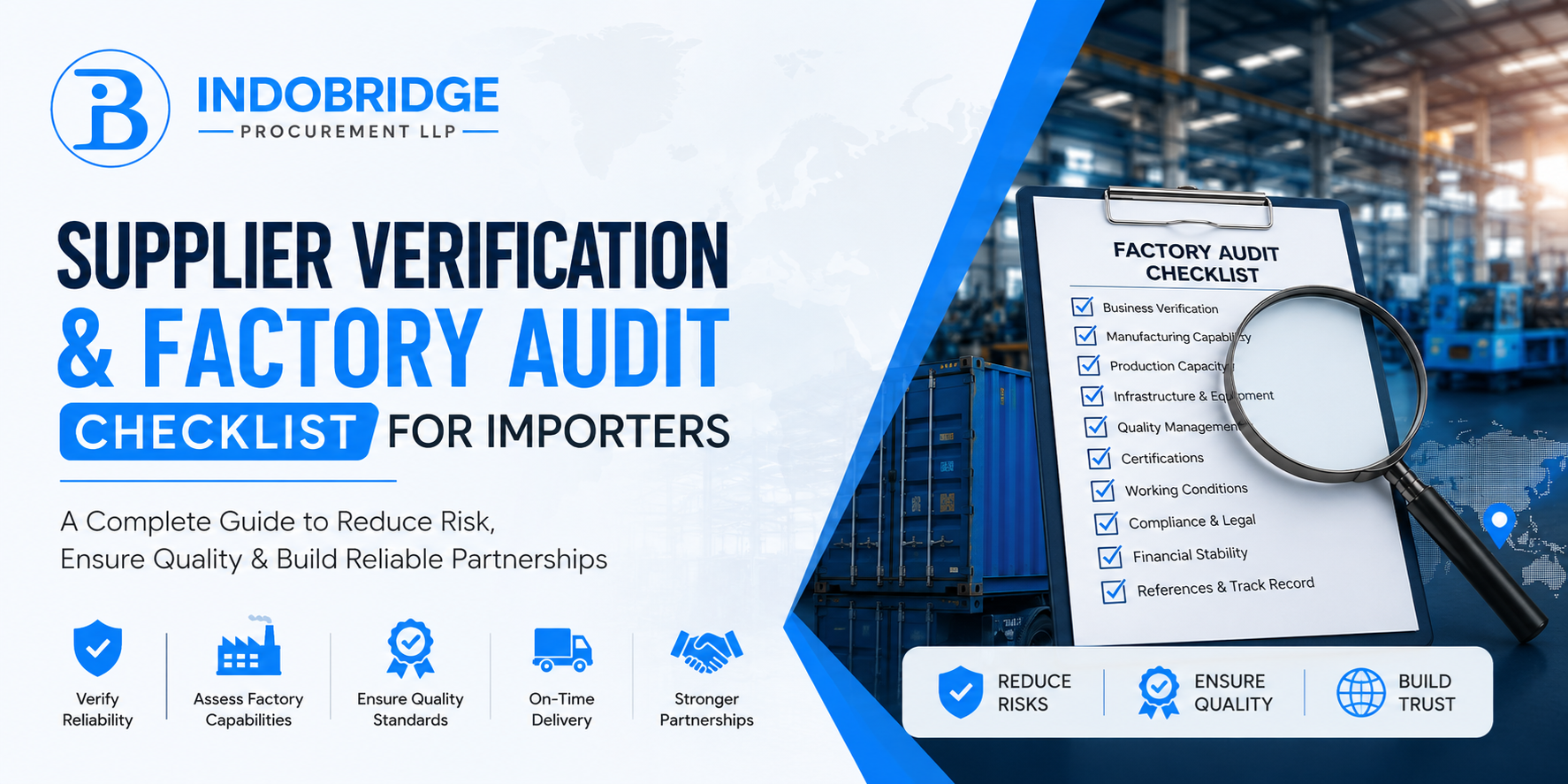
- Factory audit
- Infrastructure check
- Production capability assessment
- Quality management checks
- Compliance review
Manufacturers can avoid unnecessary and costly mistakes through independent supplier verification.
The Importance of Supplier Relationship Management
Identification of the correct suppliers is the key element of the sourcing process, although the most important part lies in the establishment of sound relationships between manufacturers and suppliers. Supplier relationships will foster increased levels of:
- Good communication levels
- Speed of resolving production problems
- Flexibility of production schedules
- Quality standards
- Long-term savings
In conclusion, a manufacturer's relationship with its supplier should not be one of buyer and seller, but rather one of partnership, maintained through constant communication and periodic review of the supplier's performance.
Why Product Quality Inspection Is Essential
Every supplier, however good, needs managing.
This leads to the product quality check. A product quality check will enable manufacturers to identify faults before shipment and therefore reduce returns and customer complaints, which can be very expensive.
Pre-Production Inspection
Pre-production inspection is to ensure the raw materials, production status, manufacturing method, etc. Before the actual production starts.
During Production Inspection
Inspection during the production stage enables you to find any problem as soon as possible and to take appropriate measures so as not to affect the entire batch of production.
Final Inspection
At the end of the production line. Finished goods are inspected to meet the specification before shipping out. Common points of inspection are:
- Product's dimensions
- Product's material quality
- Product's functionality test
- Product's packaging specification
- Quantity count
- Product's labeling
Constant inspections on products will lead to good sourcing results.
The Role of Technology in Direct Material Sourcing
Technology is being used more and more in contemporary sourcing functions to maximize their operational performance.
Procurement Software
e-procurement systems allow organizations to streamline supplier, purchasing, contract, and inventory management.
Supplier Databases
technology has been adapted for the consolidation of supplier data, making it simple to assess and monitor individual supplier performance.
Data Analytics
analytical techniques allow for the identification of patterns in the sourcing process, enabling a higher evaluation of supplier capabilities and a more strategic sourcing decision.
Supply Chain Visibility Tools
real-time tracking and management systems have given organizations a much clearer insight into the entire sourcing and production process.
Technology supports decision-making and minimizes operational risk.
Why India Is a Strategic Sourcing Destination
India is one of the top sourcing destinations worldwide thanks to its varied manufacturing and competing production systems. Among the sectors that lead are the following:
- Apparel and textiles
- Engineering products
- Auto components
- Ceramics and building materials
- Furniture and home dcor
- Packaging products
- Chemicals and pharmaceuticals
- Industrial products
When procuring in India, companies take advantage of the low cost, qualified employees, supply chains network and export experience. Yet, challenges with off-site supplier management keep local buying support very useful.
How a Buying Office Supports Direct Material Sourcing
Many of the global Manufacturers decide to work with an Buying office in India to make their sourcing and vendor management much more efficient and easier.
The buying office in India functions as an on-the-ground extension of their client's sourcing/buying department. Key activities:
- Supplier Sourcing
- Factory audits
- Supplier vetting
- Sample coordination
- Order follow-up
- Production control
- Quality assurance & inspections
- Shipping & logistics coordination
- Export document support
A buying office provides buyers with more control over their sourcing as they are aware of the local operations.
Benefits of a Buying Office
Local Market Expertise
A Buying office in India will know more about the local industry setup, potential of the supplier and local trade practices.
Better Supplier Management
Frequent factory visits and direct communication improve the supplier's responsibility.
Reduced Operational Risks
The presence of local procurement teams in India will eliminate a lot of risks like sourcing, legal, and logistical ones.
Best Practices for Successful Direct Material Sourcing
Below are some of the best practices that manufacturers can adopt to improve their sourcing performance:
Diversify Supplier Networks
Don’t put all your eggs in one basket. Having a number of qualified suppliers reduces supply chain risk.
Monitor Supplier Performance
monitor factors such as:
- Quality of performance
- On-time delivery ratio
- Production Capacity
- Responsiveness:
- Compliance performance
Conduct Regular Audits
Regular audits of suppliers should be performed on a continual basis in order to ensure quality and operational standards are being maintained.
Invest in Communication
Communication lines should be set up, clear, and ongoing in order to minimize misunderstandings.
Use Independent Inspections
Third-party inspectors are responsible for ensuring that quality standards are met, and for providing fair and transparent verification of quality and tracking.
Maintain Long-Term Partnerships
Building a lasting, strategic relationship with a supplier rather than purchasing items on an as-needed basis often brings greater reliability, improved prices and higher service levels.
Conclusion
Optimizing Direct material sourcing is important for manufacturers hoping to protect their product quality, manage costs, and establish robust supply chains. The direct material sourcing is constantly growing globally, but issues like supplier verification, production control, consistency of product quality, communication gaps and logistic issues are always of critical concern to the buyers worldwide.
Therefore, most international buyers decide to establish an experienced procurement agent and a reliable Buying office in India so as to provide on-the-ground exposure and control over production. It offers them extensive support from supplier sourcing & verification to production follow-ups and product quality inspection and it extends up to managing logistics to support manufacturers in shipments.
Indobridge Procurement also follows the same principle and effective sourcing isn't just finding suppliers; it involves effective management of the procurement process through communication, on-ground implementation, quality assurance, continued supplier engagement, etc.