What Is Supplier Verification?
Supplier verification is an independent assessment of the supplier's business practices, production capability, facilities, certifications, quality systems and reliability as a whole before doing business with the supplier.
The objectives of supplier verification are to answer the questions such as;
- Is this supplier a legitimate business?
- Can they make the part required?
- Do they have enough capability to make the part required?
- Do they have any quality systems?
- Can they deliver on time?
- Are they able to comply with industry standards?
Through a comprehensive verification, the buyer will have greater assurance with purchasing decisions.
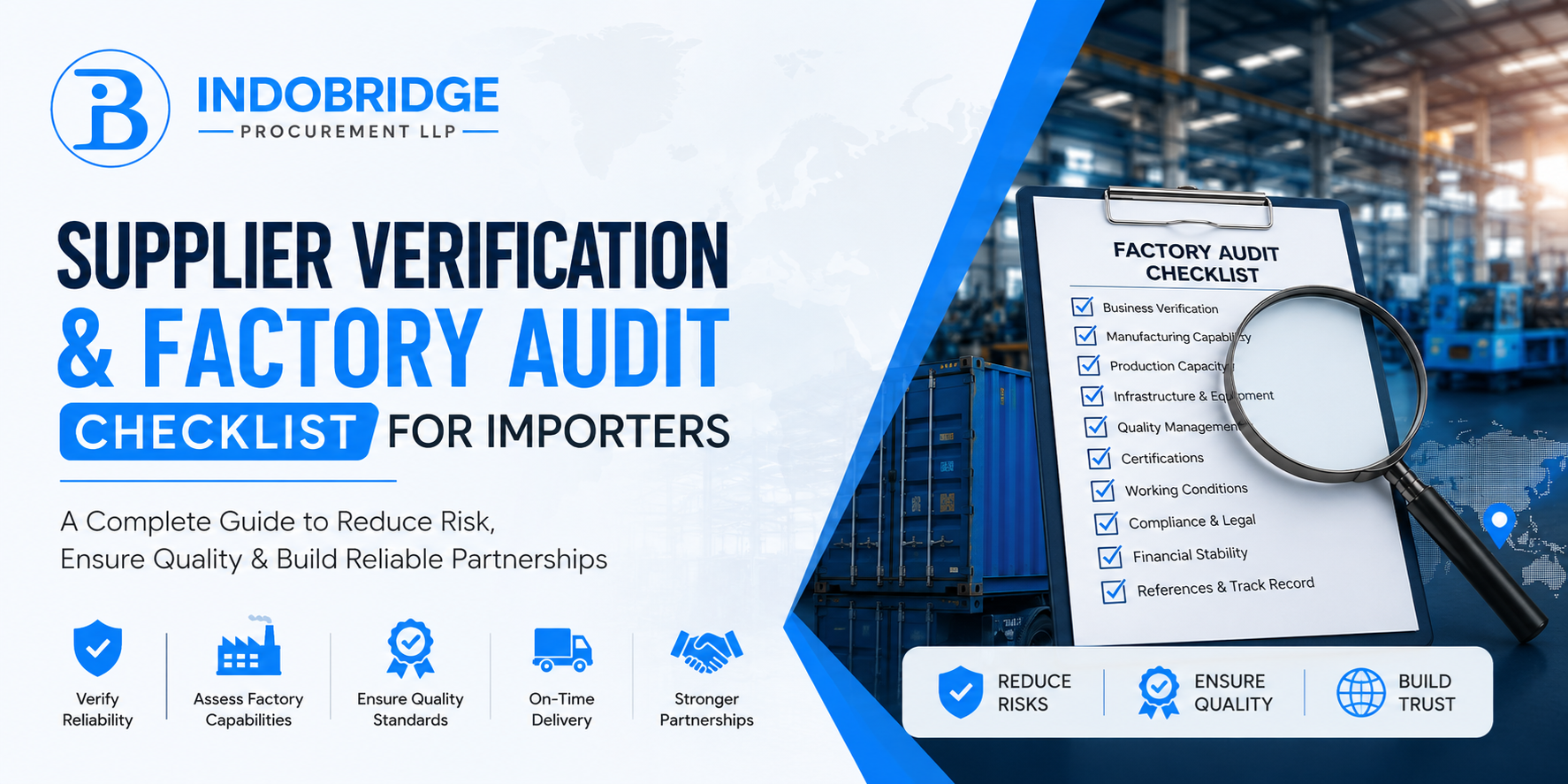
Supplier Verification Checklist for Importers
1. Verify Business Registration
The following items must be verified in order to verify that the supplier is bona fide.
- Company Registration Certificates
- Business License
- Tax Registration
- Export License
- Ownership
Verifying the legal documentation from the above list will verify whether or not the supplier is in fact a legitimate business.
2. Confirm Manufacturing Status
The importer has to verify if the supplier is an actual manufacturer or a trading company.
Crucial points to analyze are:
- Is the factory owned by the supplier?
- Are there real production processes and manufacturing equipment?
- Which products is the manufacturer specializing in?
- Is the structure of the staff reasonable?
It is generally more beneficial for importers to deal directly with manufacturers since communication, costs and manufacturing processes are more controllable.
3. Assess Production Capacity
How the delivery performance of the supplier is affected by capacity.
Review:
- The level of production per month
- Number of lines of production
- Size of the workforce
- The shift patterns
- Lead times
- Capacity of utilization
The supplier needs to be able to cope with both the present and future level of volume.
4. Inspect Factory Infrastructure
Factory environments give an excellent indication of operating efficiency.
Review:
- Factory layout
- Warehouse capacity and layout
- Material handling equipment
- Storage areas
- Safety and security policies and procedures
- Maintenance of facilities.
Professional factory auditors typically include a detailed infrastructure review of facilities and processes.
5. Review Machinery and Equipment
Machinery condition directly impacts the consistency of the product produced.
Check:
- Machinery condition
- Age of equipment
- Maintenance procedures/schedule
- Calibration records
- Automation level
State-of-the-art maintained machinery will usually result in good quality products and throughput.
6. Evaluate Quality Management Systems
This is one of the key areas of sourcing, quality control.
Review of:
- incoming material inspections
- in-process inspections
- final product inspections
- testing procedures
- quality documentation
- corrective action procedures
A quality system should be established with dependable suppliers.
7. Verify Certifications and Compliance
Indication of systems and processes already in place are verified by industry certifications. The common industry certifications include:
- ISO 9001
- ISO 14001
- ISO 45001
- CE marking
- Specialist industry certifications
Check the authenticity of certifications and that they are applicable to the system being supplied.
8. Assess Workforce Competency
The productivity of the manufacturing process is controlled by employees. Evaluate:
- Worker training plans
- The workforce skill
- Workforce stability
- The worker-in-charge (management) system
- The rate of labor turnover
Skilled and stable workers produce quality goods.
9. Review Raw Material Sourcing
The quality of the end product is closely tied to the quality of raw materials that have been inputs to the product.
Assess:
- Raw material suppliers
- Criteria for supplier selection
- Traceability of materials
- Control of inventory
A good supplier relationship yields reliable quality and availability of the product.
10. Evaluate Production Planning Systems
Often inefficient planning and scheduling can be the cause of production delays.
Review:
- Production monitoring systems
- Order tracing systems
- Capacity planning procedures
- Production reporting procedures
Planning system can increase transparency and delivery performance.
11. Check Export Experience
If your supplier has experience of exporting, they should be better able to manage your needs.
Consider:
- Existing track record of exporting.
- Target export markets.
- Document control.
- Export packaging.
- Norms and adherence to the regulation of other countries.
The exporter is less likely to have problems during customs transit.
12. Assess Financial Stability
Risk profile of financially unsteady suppliers.
Assessment:
- Business lifespan
- Trends in development
- Operational robustness
- Investment in assets, infrastructure and machinery.
A financially stable supplier provides good opportunities to build long-term business relationships.
What Should a Factory Audit Include?
Standard factory audit service can usually evaluate the following aspects:
Factory General
- The size and description of the facility and factory layout.
- The facility equipment and structure.
Manufacturing Capability
- The efficiency of producing operations
- Manufacturing procedures.
- Availability of equipment.
- Capacity assessment.
Quality Systems
- Quality inspection and testing procedure.
- Quality records and documentation.
Compliance audit
- Legal compliance with standards.
- Labor compliance to codes of conduct and labor rights.
Health and safety.
- Production Performance
- The productivity of production.
- Stock control and management.
- Process controls.
With these audits, a buyer can objectively verify supplier competence before issuing an order.
Benefits of Professional Supplier Verification Services
Most importers don't have either the time or local presence to effectively conduct supplier audits.
Third-party supplier auditing companies usually provide:
- Unbiased assessment of supplier
- On-site factory audits
- Company background check and validation
- Assessment of production capability
- Quality management system audit
- Identification of possible risks
- Full audit report
This helps buyers to avoid costly procurement risks and make sound decisions in the sourcing process.
Benefits of Professional Factory Audit Services
Factory audit services professional services, offer a level of "on the ground visibility" that can be impossible for importers to achieve from their remote offices. The main advantages are:
- Independent verification of the factory
- Early detection of potential operational risks
- Improved selection of suppliers
- Higher quality control standards
- Increased visibility of production
- Less uncertainty in sourcing
Factory audits can inform purchasing decisions before large investments in orders have been placed.
Conclusion
Good sourcing means more than simply choosing a supplier with a competitive price; it refers to the process of finding out suppliers that meet the importers' requirements, suppliers that possess the required infrastructure, production capacity, quality system and operating ability for long-term development. Through good Supplier verification and thorough factory audits, importers can reduce the risks, enhance suppliers performance and gain more confidence in procurement processes.
For business importing from India, on-the-ground coordination and visibility make quite a difference. Whether it is to help customers identify suppliers, conduct Supplier verification, perform factory audits, follow up on production, perform quality inspection, manage logistics and ensure a timely shipment delivery; the strong sourcing partner that is located at the site will effectively achieve more transparency, more reliability and more professional procurement service. By making independent evaluations on suppliers and coordinating them throughout the processes, the companies could achieve a reliable sourcing system and escape all sorts of unexpected loss and problems during the sourcing operation.
Common Risks of Working with Unverified Suppliers
- Overstated Manufacturing Abilities: Many suppliers claim to be manufacturers but are actually traders or agents. This will result in overpricing and communication problems with less production control.
- Quality Failures: A supplier can provide great samples but may not meet a higher-quantity production. Without the appropriate follow-up, a quality problem can go undetected until after goods are shipped.
- Production Delays: Overstretched manufacturing capacities, poorly planned schedules and lack of a management system may result in non-compliance with delivery schedules.
- Compliance Issues: Lack of certifications, documentation and non-compliance with relevant industry regulations will cause issues with import and can be extremely expensive to fix.
- Communication Barriers: Differences in languages, cultures, and time zones all contribute to communication problems with regard to product specifications, order fulfillment and delivery schedules.
Why Supplier Verification Is Critical for Importers
The landscape of business is being reconfigured by the notion of global sourcing. Several countries like India have risen as big sourcing centers by having diverse manufacturing capabilities, low manufacturing costs, an experienced labor pool and a developing exporting system. However, finding a supplier over the internet is only one piece of the story; it is the assurance of them being reliable and capable of satisfying your requirement for quality and delivery time that makes it complicated.
There are several kinds of problems importers run into—like shipment delays, variable quality standards, communication problems, and compliance failures—only because they fail to carefully vet their suppliers before placing orders. This is the exact case when supplier verification and factory audit can help. Before placing the order, it is important that you try to verify and vet suppliers with care and try to avoid the kinds of risks that can endanger your money.
This guide offers a detailed checklist that importers can follow to initiate a proper supplier verification process by availing services such as professional supplier verification and factory audit services.
In international sourcing you could be working with suppliers thousands of miles away. Lacking visual inspection of the operations, the importers have to trust their suppliers' claims, website information, catalogs, and online profiles. Usually, this information doesn't accurately represent the true capabilities of a supplier. A systematic Supplier verification process provides importers with assurance that:
- Suppliers are authentic and legitimate
- The suppliers are actually manufacturers, and not only trading companies
- Production facilities are in place
- The suppliers are able to perform the work required
- The quality management systems exist
- Sourcing risks are minimized
- The stability of the supply chain increases
The alternative of an unimproved supplier is the importation based on faith that the supplier is capable enough to fulfill the order.